Article 15 of the Working Conditions Act: What Does This Mean for Your Emergency Response Team?

What does Article 15 of the Occupational Safety and Health Act say?
 Providing first aid in the event of an accident.To contain and extinguish fires and mitigate the consequences of accidents.In the event of an emergency, alert and evacuate employees and other people on the premises.
Simply appointing emergency response team members is not enough
Which emergency response team members are present and available.What skills are available at a given location.How to quickly reach the right people in the event of an incident.
From a Legal Requirement to an Effective Emergency Response Organization
How Findwhere Helps with Article 15 of the Occupational Safety and Health Act
1. Understanding Your Emergency Response Staffing Levels
Findwhere provides insight into staffing levels by location and skill set. This allows you to see where shortages are occurring and where action is needed. This helps you ensure that you have sufficient on-site emergency response personnel.

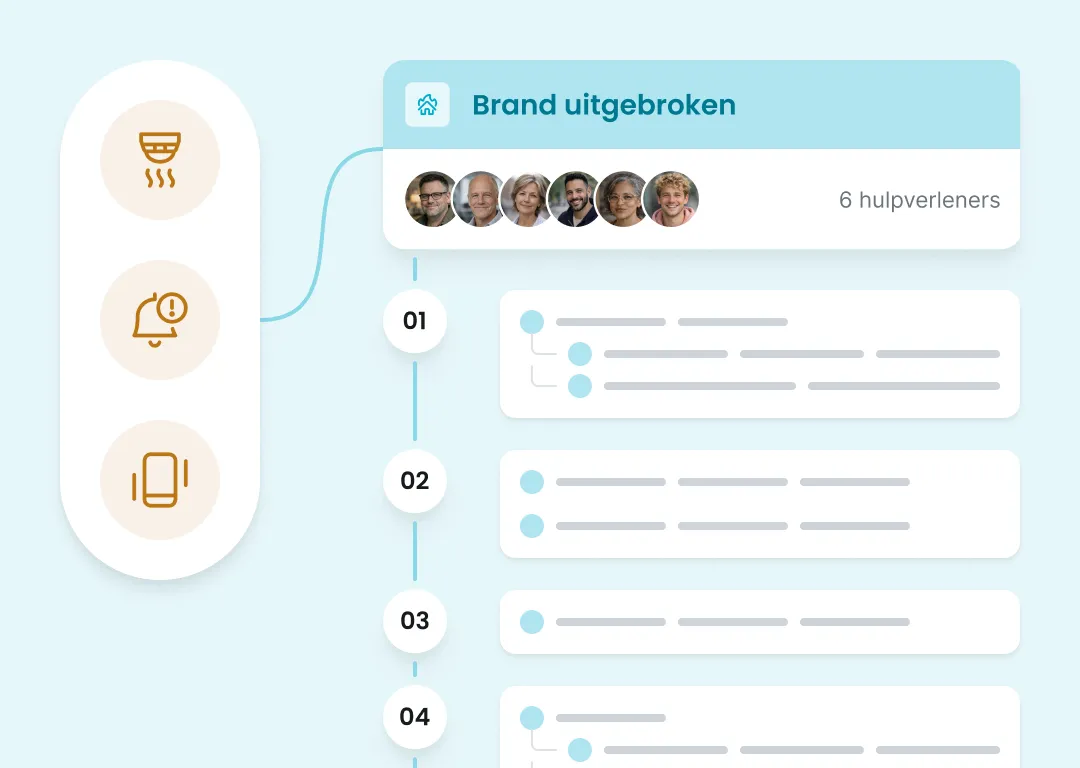
2. Immediately alert the appropriate emergency responders
With Findwhere, you can link skills to protocols. This makes it possible to call in the right team in a targeted manner in the event of an emergency.

3. Clear protocols for emergencies
You tailor this to your company’s emergency plan, RI&E, locations, and risks. When the system is activated, emergency responders receive the information and tasks related to the incident.

4. Alerting, Communicating, and Escalating
Findwhere supports the operational aspects of this. Emergency responders can be alerted in a targeted manner and communicate with one another during the incident. The protocol can also provide for scaling up operations if the response is insufficient.

5. Reports for Insight and Evaluation
Findwhere records information related to incident reports and protocols that have been implemented.
Reports provide insights by location and skill. This gives you concrete information you can use to evaluate and improve your emergency response organization.
From Article 15 to Everyday Practice

One platform for your entire emergency response organization
Gain insight into available care providers per location.
Reach the right people in a targeted manner during an incident.
Digitize procedures and align them with your own risks.
Keep emergency responders connected during an incident.
Gain insight into staffing, incidents, and the execution of protocols.

Why organizations choose Findwhere
An advanced and user-friendly platformFlexible design for any organizationFast and secure implementationScalability from a single location to multiple sitesSeamless integrations with existing systemsContinuous innovation and developmentArticle 15 of the Occupational Safety and Health Act
Article 15 stipulates that an employer must be assisted by one or more designated employees in providing workplace emergency response services. Among other things, these emergency response team members provide first aid, contain and extinguish fires, and assist with raising the alarm and evacuating during emergencies.
Article 15 stipulates that the employer must be assisted by one or more employees who have been designated as emergency response team members. The exact structure of the emergency response team depends on the organization and the risks involved.
Article 15 does not specify a fixed minimum number that applies to every organization. The law states that the number of emergency response team members and the way they are organized must be such that they can perform their duties properly. The structure must therefore be tailored to the organization’s specific situation and risks.
The law specifies three core duties: providing first aid in the event of accidents, containing and fighting fires, and minimizing the consequences of accidents; and, in emergency situations, alerting and evacuating employees and other people on site.
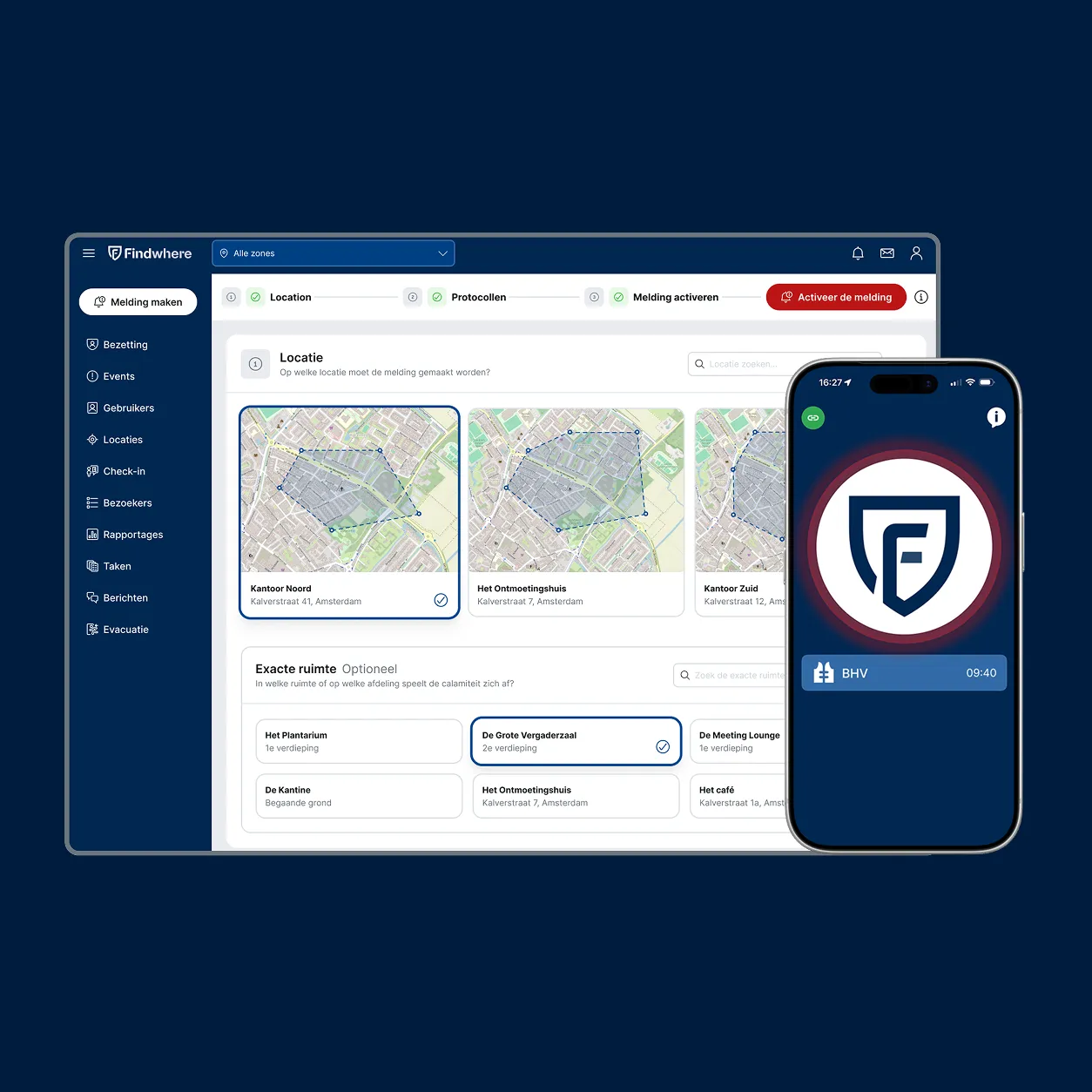
Findwhere supports organizations in the practical management of their emergency response teams. Among other things, the platform provides insight into staffing levels and skills and supports protocols, alert systems, communication, and reporting. In this way, Findwhere helps organize and ensure the effectiveness of elements that are essential to a well-functioning emergency response organization.
Findwhere does not, in and of itself, guarantee legal compliance. The employer remains responsible for ensuring that the emergency response team is properly organized.
No. Findwhere is software designed to organize and support workplace emergency response. It does not replace the required training for workplace emergency responders.
The official Working Conditions Act can be found at wetten.overheid.nl. For legal decisions, always use the current official text of the law.
Still have questions?

