70,000+ people
met een veilige werkplek
Emergency Response Beeper? Choose Findwhere for greater peace of mind
Organizations that still rely on emergency response pagers are facing an increasing number of limitations. Issues with availability, management, maintenance, and limited functionality are making traditional pagers less and less suitable for modern workplace safety. Fortunately, there is a smarter alternative.




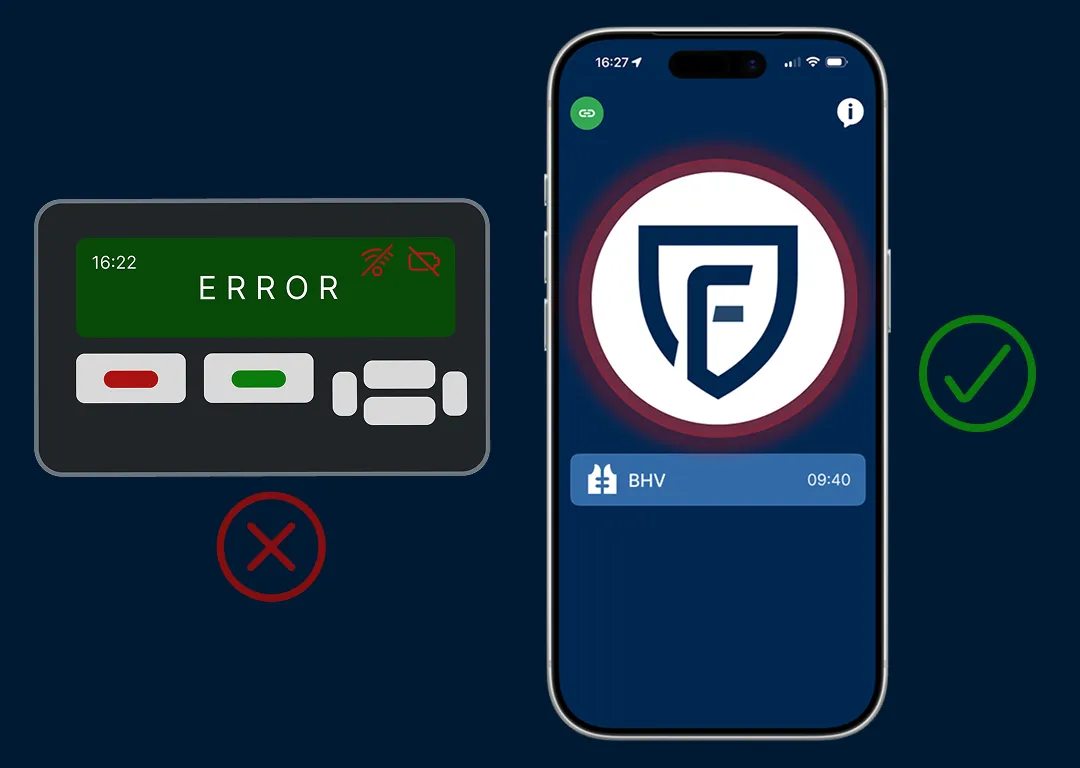
Emergency response pagers are a thing of the past
For years, the emergency response pager was the standard for summoning emergency response team members. Organizations have since evolved. Employees work in a hybrid model, locations are expanding, protocols are becoming more complex, and there is a need for real-time insight during incidents.
A traditional emergency response pager basically does only one thing: send a signal. But is that still enough these days?
Many organizations are looking for a solution that:
Alerts more quickly;
Provides insight into available emergency response team members;
Immediately activates the appropriate protocols;
 Can be easily managed;No additional hardware is required.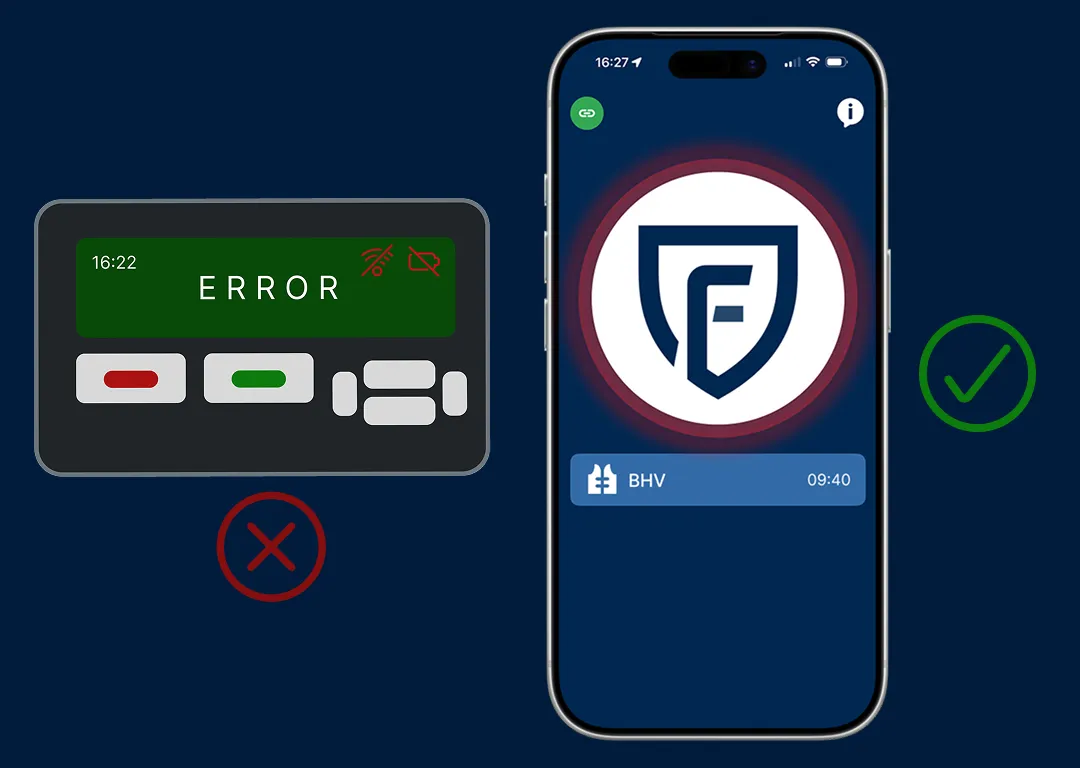
Why Organizations Are Phasing Out Emergency Alert Beepers
More and more people are making the switch from landlines to a digital platform. And there’s a good reason for that.

No real-time location information
Emergency response pagers do not indicate which responders are present, available, or closest to an incident. As a result, valuable time is lost during an emergency.

No acknowledgment of receipt
With a pager, you don’t know whether a message has actually been received or acted upon. That creates uncertainty at a time when every second counts.

Limited Communication During Incidents
An emergency response pager only sends an alert. It is often not possible to share instructions, coordinate, or escalate the response during an incident.

High costs for hardware and replacement
Potatoes require investments in equipment, maintenance, and replacement. In addition, they entail extra management and logistical work

Difficult to scale in growing organizations
When new locations are added, additional emergency response team members are assigned, or staffing standards are adjusted, pagers often need to be manually expanded or reconfigured.

No integration with existing IT systems.
Traditional doorbells typically operate independently of systems such as Microsoft Teams, access control, fire alarm systems, or other security applications.
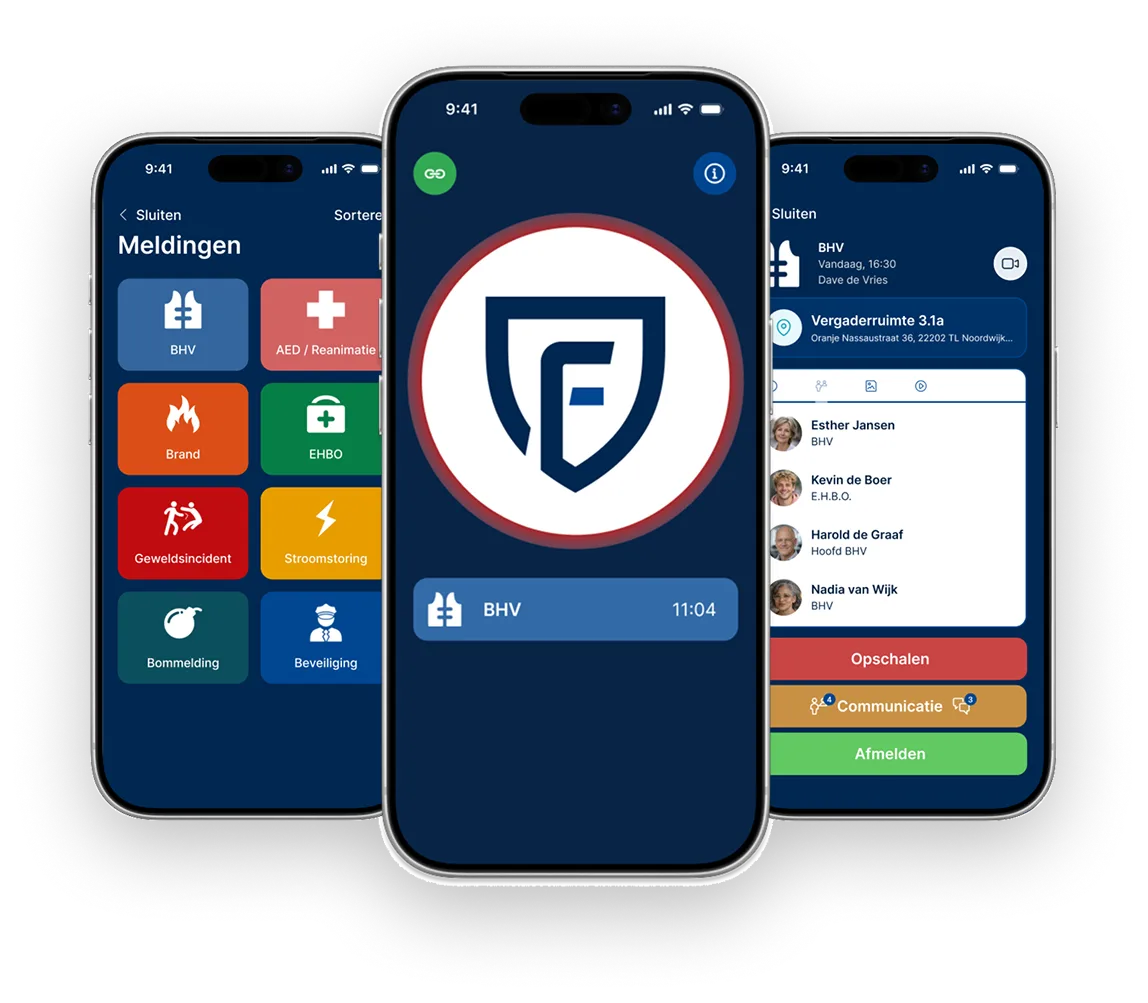
Why choose our emergency response app instead of pagers?
Emergency response pagers have played an important role in workplace safety for many years. However, today’s organizations expect more than just an alert signal. They want insight, flexibility, and the assurance that the right first responders will spring into action immediately. With the Findwhere emergency response app, you have a future-proof solution that goes beyond simply alerting everyone
Reach the right emergency responders fasterAlways stay informed about your emergency response team staffing levelsMore Than Just a CallEasy management without additional hardwareIntegrates easily with existing systemsProven in practice—already providing a safe workplace for over 70,000 people


Why organizations choose Findwhere
 An advanced and user-friendly platformFlexible design for any organizationFast and secure implementationScalability from a single location to multiple sitesSeamless integrations with existing systemsContinuous innovation and development
Platform
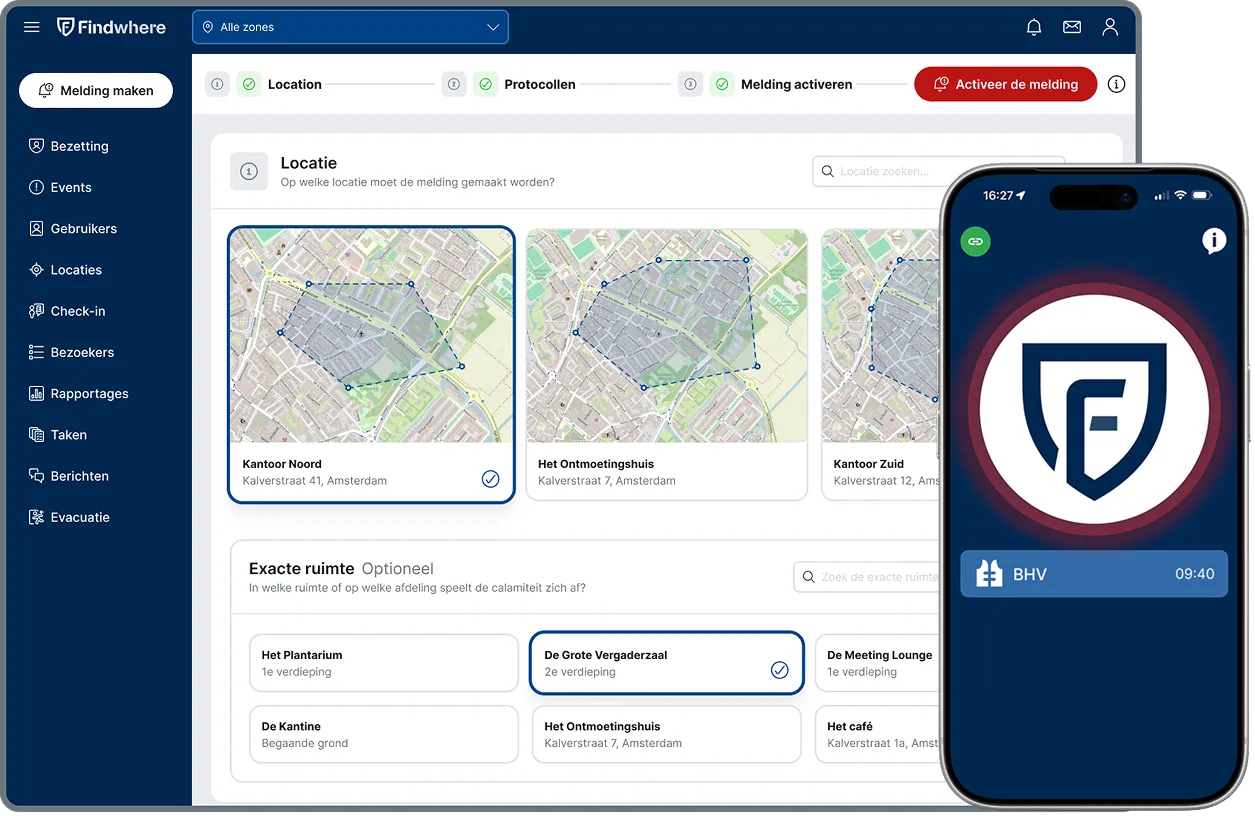
Findwhere enables lightning-fast response and prevention
The Findwhere Platform offers the flexibility to respond quickly and take preventive measures for any potential disaster.
The App
Everything around corporate security is set in the platform and visible within the app on the desired employees’ phones.
Protocols
Skills can be linked to an emergency, in protocols that are flexible and freely configurable.

See Findwhere in action
Schedule a free demo
Veelgestelde vragen
Answer your questions
Is an emergency response pager still required?
No. There is no legal requirement to summon emergency response team members using pagers. However, employers must ensure that they have an effective emergency response organization in place.
Does the Findwhere app work on every smartphone?
Yes. The app supports both iOS and Android and is easy to roll out within organizations.
Can Findwhere replace existing emergency pagers?
Yes. Organizations are using Findwhere precisely to phase out pagers and switch to a flexible digital solution.
Is it possible to integrate with Microsoft Teams?
Yes. Findwhere offers an integrated Microsoft Teams solution that allows security processes to be initiated and managed directly from Teams.
How quickly can Findwhere be implemented?
The basic environment can be up and running within a day. Organizations are typically fully operational within two weeks.
Still have questions?
Our specialist is at your service.